Every year on 15 May, the UN observes the International Day of Families to reflect on the importance which the international community attaches to families as basic units of society as well as its concern regarding their situation around the world. In 2022, we have seen an increase in the number of conflicts around the world, with many families becoming separated in the midst of a conflict or during the process of fleeing or migrating.
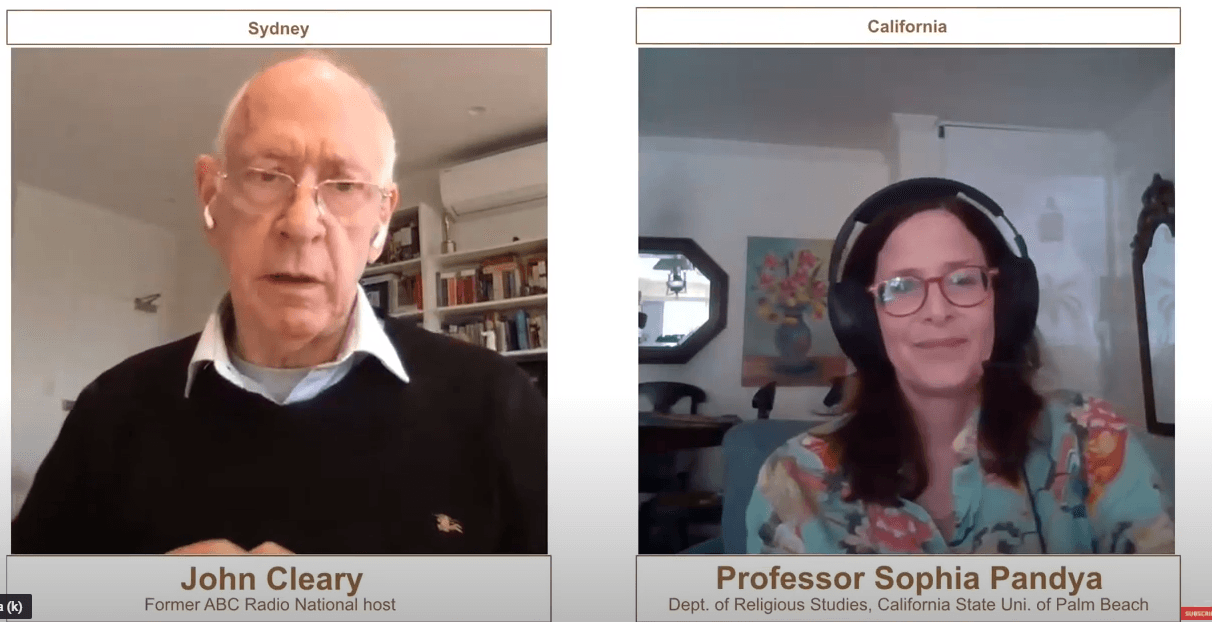
In honour of the International Day of Families 2022, Advocates for Dignity (AFD) hosted a webinar on Wednesday 18 May, focusing on the effect that despotic regimes have had on families from Ukraine, Afghanistan and Turkey. The webinar was opened by AFD President, Mehmet Saral, who introduced the moderator for the webinar, former ABC journalist John Cleary. Mr Cleary introduced each of the guest speakers and conducted a Q&A session after each speaker’s talk. There were three notable speakers who were experts in their respective fields. The speakers included:
The webinar began with Prof Pandya reflecting on her studies of Turkish families that crossed the borders of Turkey to Greece through the Maritsa river, to flee persecution as a result of President Erdogan’s regime after the attempted coup of 2016. She noted that in 2022, over 84 million people have become displaced to political turbulence and conflict around the world, with at least 35 million of those being children.
“When we think about the refugee status, crossing a river is only one stage of their journey. For some, the journey may include hiding from arrest, exploitation, human trafficking, sexual assault, conlfict and death,” she said. “It is actually women and children who die in higher rates, and they are more vulnerable, especially to violence and sexual assault. Many women and girls suffer disproportionately from poverty, family separation, language barriers, lack of access to resources.”
Pandya’s research has found that the impacts of the trauma of displacement result in depression, anxiety, and a very concerningly diminished ability to parent effectively, which is how displacement becomes an intergenerational issue within families. Not only do children have to endure the trauma of the journey, poor living conditions, a series of relocations, mental health problems, especially PTSD, but they also face poor care due to the mental health of their parents.
She then provided an example of an interview with a displaced Turkish mother in Greece. She said: “A mother of twins said she arrived in Greece with her twins, and couldn’t even access diapers for them in the refugee camp. Now that her twins are 2 years old she expresses that she does not want to play with them anymore. She said ‘I don’t want to be with them, I can’t handle them’. She did not want to be a mother. This is a family crisis, there are many mothers who are so emotionally and psychologically affected that their family lives are in crisis.”
Em Prof Maley then spoke about how displacement has been such a major part of the life of Afghan families for decades, highlighting that what displacement fundamentally does is tear apart support networks that are fundamental in sustaining families in functioning societies.